Friday, February 27, 2015
Light and the Universe
Can we travel at the speed of light and if so how far in the universe can we go or can we go to other universes or is there only are universe or are we an advanced program created by another civilization? The video below talks about traveling the speed of light and they reality of it. We can never travel that fast, unlike most sci-fi movies, because we have mass and mass can never travel at that high of a speed. The other question posed in this video is what is the universe and can there be many different universes. Both of these questions go back to the original question for this blog, What lies beyond where man has not gone?

Friday, February 20, 2015
See You Next Year
Every person knows about the International Space Station and the many men and women that are sent up to it each year. However many people probably do not know that they are only up in space for a couple months and then are brought back home. This March will be the first time in history that two astronauts will be sent up to the ISS for a full year. Their mission is to conduct experiments in space but they are also part of an experiment. NASA will be closely observing the ways in which NASA astronaut Scott Kelly and Russian cosmonaut Mikhail Kornienko bodies will change during their year in space. This test will give NASA information on how an astronaut's body will change during a deep space mission such as traveling to Mars. With this information NASA will be able to better plan and come up with solutions on how to keep the human body healthy in the vacuum of space. The two men will start their journey March 2015 and will be under strict watch until after their return March 2016.

|
 NASA astronaut Scott Kelly (left), the Expedition 43/44 flight NASA astronaut Scott Kelly (left), the Expedition 43/44 flight engineer and Expedition 45/46 commander; and Russian cosmonaut Mikhail Kornienko, the Expedition 43-46 flight engineer, will serve one full year on the International Space Station starting in March 2015. engineer and Expedition 45/46 commander; and Russian cosmonaut Mikhail Kornienko, the Expedition 43-46 flight engineer, will serve one full year on the International Space Station starting in March 2015.Credit: NASA/Bill Stafford |
Friday, February 13, 2015
Boeing Entering the Great Race
The great passenger jet company Boeing is now making news in space. The company is working on their CST-100 Spaceship and plans to be sending a crew within it into space by 2017. The craft resembles many of the other deep space ships being produced lately. They all seem to be applying a gum drop shape to their return modules. This push foreword by Boeing has been heavily financed by NASA, hoping to rely less on the Russian space program. The CST-100 will be able to hold seven crew members, be reused 10 times, and be able to land on land. This means that this ship will be the first to land on land since the space shuttle program, everything else lands in the ocean. The ship will mostly be used to send crew members back and fourth form the International Space Station (ISS) but Boeing says it may take normal people into space on joy rides, hoping to make some money off the ship.

|
| This artist's illustration depicts a Boeing CST-100 spacecraft approaching a private inflatable space station complex designed by Bigelow Aerospace.Credit: Boeing |
Thursday, February 5, 2015
The Reusable Rocket Take Two
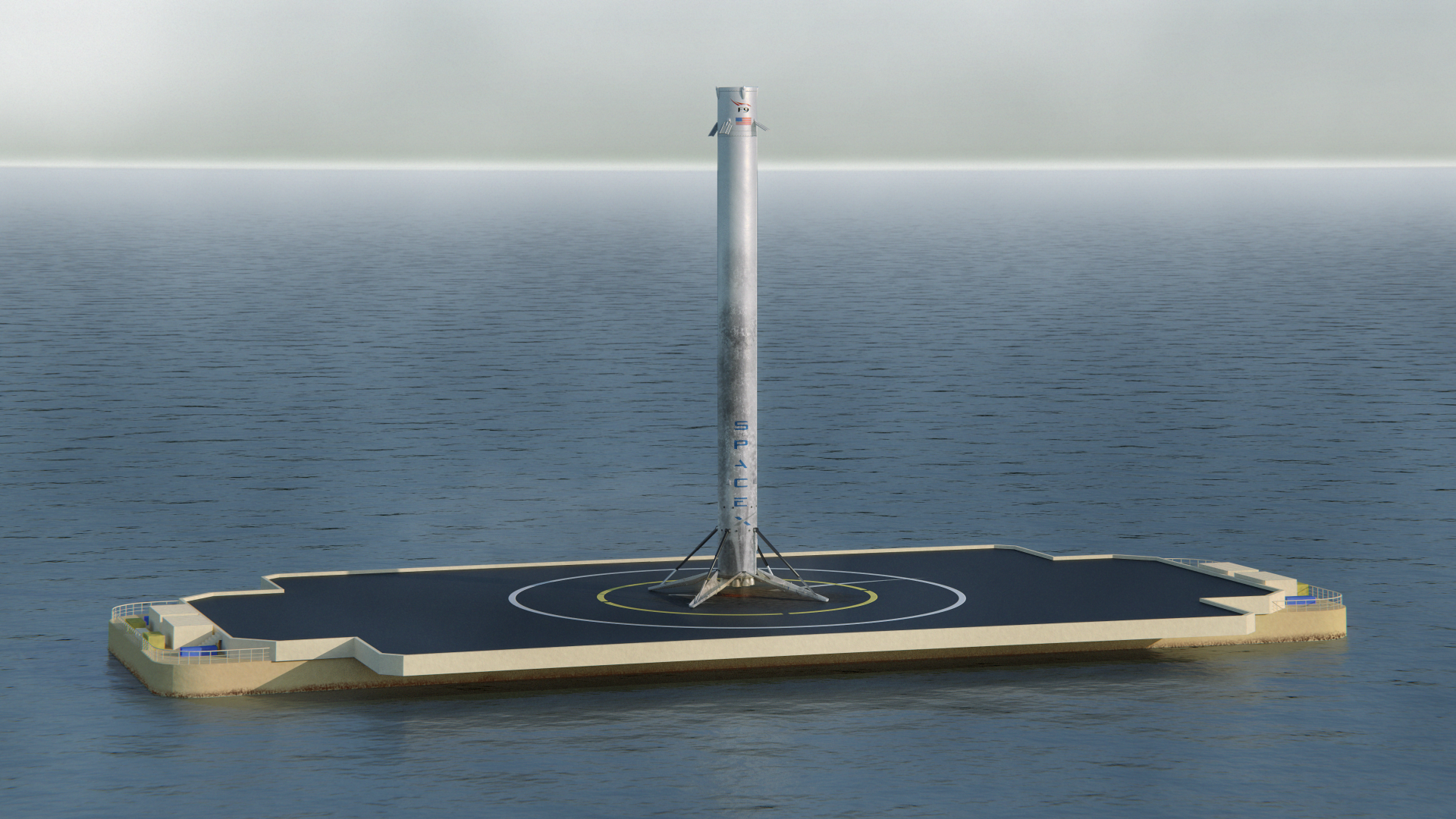
The company SPACEX is at the forefront of space travel and innovation. This Sunday, February 8, at approximately 6:30 a.m. the company will be trying to push even further. SPACEX will be for the second time trying to launch and land its Falcon 9 rocket. This attempt was made earlier and can be seen failing here: https://vine.co/v/OjqeYWWpVWK . The attempt failed but just barely. The rocket landed on a 300 ft. by 100 ft. barge in the Atlantic Ocean which is an enormous achievement for human space travel. The company is obviously hoping to do much better this attempt but if they fail, SPACEX has another 15 launches already planned for this year alone, including its Falcon Heavy the world's most powerful rocket by a factor of 2. What is the big deal about landing a rocket and taking off with it again though? The answer is that this process would significantly decrease the cost of going up into space. We would be able to send many more missions into space and learn a lot more about a vast area we still know very little.
 |
| SPACEX Home |
 |
Jon Ross at @zlsadesign and zlsa.github.io Artist's impression of SpaceX rocket landing. |
Thursday, January 29, 2015
Sailing on the high Space?
We will as a civilization be sailing through space like we once sailed the oceans to find new lands? The Planetary Society hopes so. This non-for profit group has been funded solely by citizens and is planning to send two missions into space in the coming months. In May 2015 the company will be sending up its first test satellite in order to test the operational systems of their space sail or LightSail as they call it. Then in 2016 the company will send the finalized rocket up out of Earth's orbit and find out if the idea of a space sail is effective. But how does a space sail work? There is no wind in space so what can push it and the craft it's attached to forward? The answer, tiny light energy particles called protons. When the protons hit the surface of the sail they transfer their momentum to the sail and cause it to accelerate forward. These particles travel extremely fast, the speed of light, but have very little mass. This gives them very little momentum but over a period of time the momentum would build as the space craft traveled causing an eventual acceleration that would get very fast. This way of producing acceleration for a spacecraft would be very cost effective because it provides a limitless source of power to push the craft forward unlike chemical or gas rockets.


Friday, January 23, 2015
The Rocket That Will Power Orion
NASA's new rocket is constructed is about to begin testing. The Space Launch System or SLS is designed specifically for Orion and to propel the ship to Mars and asteroids in the near future. The new rocket is similar to the ones used on the space shuttle and employs some of the same technology. The boosters for the rocket will be used for the first two minutes of flight in order to get the ship out of the Earth's gravitational pull. There are two boosters and each will provide a trust of 3.6 million pounds of thrust. Once the boosters run out they will detach and the ship will be left with its cryogenic liquid hydrogen and liquid oxygen supplies that will feed the vehicle’s RS-25 engines. These engines will do all the work once in space and will be able to take man to, with the help of Orion, finally to the red planet.


The first qualification motor for NASA's Space Launch System's booster is installed in ATK's test stand in Utah and is ready for a March 11 static-fire test.
Image Credit:
ATK
Thursday, January 15, 2015
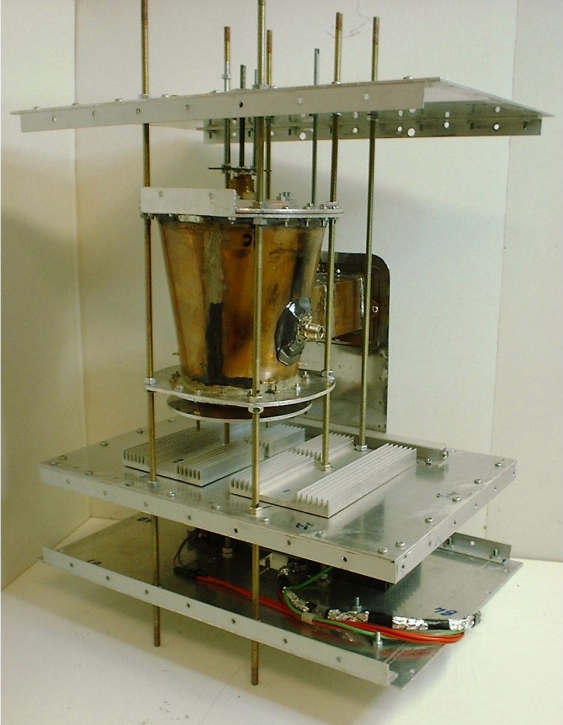
The EmDrive, breaking Physics??
Subscribe to:
Posts (Atom)